Exposure therapy is a type of psychological treatment that helps people overcome anxiety by facing the situations they have been avoiding, rather than continuing to escape them. It sits within cognitive behavioural therapy, and I have been using it with my clients for a really long time to help with a whole range of problems: phobias, health anxiety, OCD, social anxiety, panic disorder, and other anxiety disorders.
The reason it is so powerful is simple. When someone is anxious, they are terrified, and they do not want to feel those uncomfortable feelings. So quite naturally, they avoid. Exposure therapy asks them to do the opposite, and that is exactly why it works.
Why avoidance keeps anxiety alive
Avoidance is the thing that keeps anxiety going. Every time you avoid something you are frightened of, you feel relief, and your brain quietly files that away as proof the thing really was dangerous. The fear gets a little stronger. The world gets a little smaller.
I see this constantly. Someone gets scared of a lift, so they take the stairs. Then it is escalators, then the Luas, then aeroplanes, then their own car if the traffic is bad and they cannot pull over. One avoided situation becomes ten. The anxiety was never really about the lift. It was about the feeling of being trapped, and every act of avoidance taught them that feeling was unbearable.
Exposure therapy breaks that loop. Instead of running, you go into the situation and you stay there, long enough for the anxiety to come down on its own. That process is called habituation, and it teaches your nervous system something new: this was uncomfortable, but it was not dangerous, and I got through it.
What exposure therapy actually feels like in the room
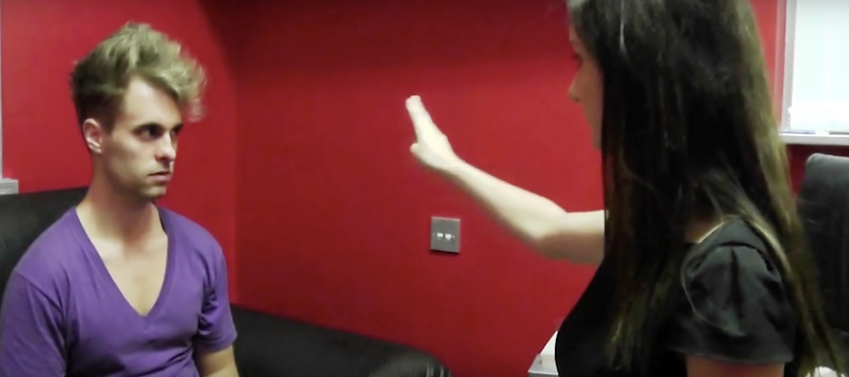
Exposure therapy is more hands-on than most people expect. Clients tend to picture sitting on a sofa talking about their fear. In reality, I usually go to the feared situation with them, either in person or convincing them through it on the other end of a video call.
I worked with a man who was terrified of enclosed spaces. He had spent 10 years avoiding anywhere he could not easily escape. Lifts, trains, even being in his own car was quite terrifying for him. His worst fear was having a panic attack somewhere he could not get out of. He had signed up for an intensive package of work with me, and we set aside six hours to do some genuinely challenging things.
One of those things was a cable car ride, the kind that carries you high over the water in a small enclosed cabin for about 10 minutes. You get in, the door closes, and once you are in, you are in. For him, it was the exact situation he had been avoiding for a decade.
At the entrance, he changed his mind. He was saying no, no, I do not want to go on. I took his wrist and said, we are doing it. Maybe that sounds a bit aggressive. But he had given his consent for this, we had done a lot of preparation beforehand, and I knew he wanted to overcome this even though his emotions were screaming at him not to. So I got him on, and the door closed.
He did have a panic attack, which was the very thing he was most afraid of. You might wonder why on earth I would want that. The reason is that people who are frightened of panic attacks spend their whole lives avoiding them, convinced that a panic attack is the worst possible thing that could happen. So I let him have it. Then I asked him to look out over the water and tell me a few things he could see. Within a couple of minutes his focus had shifted, his anxiety had dropped right down, and he started to smile. He could not believe he was coping.
At the end he gave me a big hug and thanked me for making him go on. He had avoided that for 10 years. He did it a few more times after that, and eventually it was like nothing. That is the thing about exposure. It is like watching a horror film a hundred times. The first time is awful. By the hundredth you are almost bored.
The different types of exposure therapy
There is more than one way to do exposure, and a good therapist picks the format that fits the specific fear. These are the main ones.
In vivo exposure
In vivo means facing the real thing in the real world. The cable car story is in vivo exposure. It is the version most people imagine when they think of the treatment, and it is the go-to for phobias, social anxiety, and agoraphobia.
Imaginal exposure
Some fears cannot be recreated in real life, and that is where imaginal exposure comes in. Here I guide the client to picture the feared scenario in vivid detail, over and over, until it loses its grip. It is the standard approach for PTSD, where you obviously cannot recreate the trauma, and for the intrusive thoughts that come with OCD.
Interoceptive exposure
Interoceptive exposure works with the physical sensations of anxiety rather than a situation. Spinning in a chair to bring on dizziness. Breathing through a straw to mimic breathlessness. Running on the spot to get the heart pounding. For someone with panic disorder, the fear is often the sensations themselves, so we deliberately bring them on until the body learns they are not a threat.
Graded exposure and flooding
Graded exposure works up a ladder, starting with the least frightening situation and climbing slowly. Systematic desensitisation, developed by Joseph Wolpe back in 1958, adds a relaxation technique so you stay calm as you climb. Flooding does the opposite and goes straight to the top of the ladder. My cable car case was closer to flooding. It is faster when it works, but it takes a client who is genuinely ready and a therapist who knows what they are doing.
Virtual reality exposure
Virtual reality is increasingly part of the picture, using a headset to simulate situations that are hard or expensive to stage, like flying or public speaking. A 2019 review by Carl and colleagues found VR exposure worked about as well as facing the real thing for a range of anxiety problems, which is promising for fears that are difficult to recreate.
What exposure therapy treats
Exposure therapy is the first-choice treatment for a range of anxiety disorders. The table below shows what tends to be used for what.
| Condition | Type of exposure typically used |
| Specific phobias | In vivo, graded, sometimes VR |
| Panic disorder | Interoceptive plus in vivo |
| Social anxiety | In vivo, often graded |
| Health anxiety | In vivo, plus resisting reassurance |
| PTSD | Imaginal, sometimes with in vivo |
| OCD | Exposure and Response Prevention |
For a specific phobia, whether it is dogs, needles, flying or heights, exposure is usually the fastest route to recovery, and most clients see real change within a handful of sessions. With panic attacks, I combine interoceptive work with going into the situations that used to set them off. For social anxiety, the exposures are planned social risks: starting conversations, speaking up in meetings, being visible when every instinct says hide.
Health anxiety is an interesting one, because the exposure is often about resisting the checking. Not Googling the symptom. Not asking your partner whether the mole looks normal. Sitting with the not-knowing. For PTSD, imaginal exposure to the memory is the core of the work, done slowly and carefully at a pace the person can manage. It is sometimes used alongside EMDR, another trauma treatment that works on how the memory is stored.
OCD uses a specialised form of exposure called Exposure and Response Prevention, where you face the trigger and then hold off on the compulsion that usually follows. It works differently enough that it is worth understanding on its own, and you can read more about how we treat obsessive compulsive disorder and the way exposure fits into it.
What does the science say about exposure therapy?
Exposure therapy has one of the strongest evidence bases in the whole of psychology, and the research goes back decades.
A 2011 review by Ougrin compared exposure with other talking therapies across a range of anxiety disorders and found it was at least as effective as anything else on offer. For PTSD, a 2010 review by Powers and colleagues found that prolonged exposure produced large improvements that held up years after treatment finished. And for OCD, a big 2021 review by Öst and colleagues found exposure and response prevention produced substantial change, though how large the effect looked depended on what it was measured against.
In Ireland, the HSE points to CBT-based approaches, including exposure, as the recommended treatment for anxiety disorders, and this is backed by internationally referenced guidance such as the National Institute for Health and Care Excellence (NICE). This is the treatment clinicians reach for first, not a fringe idea.
No therapy works for everyone, and some people do drop out. But when someone properly engages with exposure, the evidence that they will get real and lasting relief is about as good as it gets in mental health treatment.
What a course of exposure therapy actually looks like
A course of exposure therapy usually runs somewhere between 8 and 20 sessions, depending on the problem. It tends to follow the same shape.
We start with a couple of sessions getting to know the fear, the avoidance, and any little safety behaviours that are quietly keeping it going. Then together we build a hierarchy, a ranked list of feared situations from the mildly uncomfortable to the terrifying. We work up that ladder, often with me alongside the client for the early steps, and the client practises on their own between sessions. That homework is where most of the change actually happens. In the final stretch, we plan for setbacks, because life will throw one eventually and I want them ready for it.
Why exposure therapy is hard to do alone
Most people cannot do exposure therapy on themselves, and it is not for lack of willpower. It is that anxiety peaks before it drops, and when you are on your own, you almost always bail out during the peak.
I see this pattern all the time. Someone decides to face their fear, feels the anxiety climbing, tells themselves this is too much, and leaves. The brain then records that as the exposure failing, and the fear comes back worse than before. Part of my job is simply keeping someone in the situation past that peak, long enough for them to feel the anxiety fall by itself. That is the whole difference between exposure that heals and exposure that makes things worse.
There is also the problem of picking the right exposure. Clients often design ones that secretly include an escape hatch, some little safety behaviour that means the fear never actually gets tested. Years of doing this lets me spot those loopholes and close them, which is not something that is easy to do to yourself.
When exposure therapy works best alongside psychiatric input
For some clients, exposure therapy works best with medication supporting it. When anxiety is so severe that even starting an exposure feels physically impossible, or when OCD is eating several hours of someone’s day, a psychiatric assessment can work out whether an SSRI or similar might give the psychological work something to stand on. It is not a replacement for therapy. It is a way of getting someone well enough to do the therapy. This combined approach is well established for moderate to severe OCD, and I see the same clinical picture in severe panic disorder and health anxiety.
How Private Therapy Clinic can help
Exposure therapy is one of the treatments we use most here, and it is the reason a lot of our clients with phobias, panic disorder, health anxiety, social anxiety and PTSD have got back parts of their lives they had written off years ago. It is not a gentle treatment. It works best in the hands of a therapist who knows how to pace it, when to push, and when to sit quietly and wait. Our therapists are registered with the relevant Irish and international professional bodies, and where medication would help the therapy along, we have psychiatrists in-house who work alongside them, so you can get both in one place.
If you are weighing up therapy, we offer a 15-minute consultation to help you work out whether exposure therapy is the right fit for what you are dealing with, and to answer anything you want to ask before committing to anything. You can book a consultation here.